Paul Laudiero. SH*T ROUGH DRAFTS: Pop Culture's Favorite Books, Movies, and TV Shows As They Might Have Been. Chronicle, 2014.
Amusing. And a fast read.
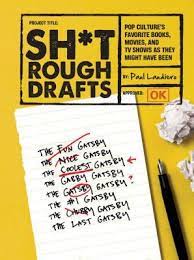
Paul Laudiero. SH*T ROUGH DRAFTS: Pop Culture's Favorite Books, Movies, and TV Shows As They Might Have Been. Chronicle, 2014.
Amusing. And a fast read.
Harlan Coben. Home.
This is my first Coben. Did not really work for me. Not impressed with the protagonists.
A novella about the origins of dreams, love, reincarnation, and the possibility of insertion into this sphere during times of crisis.

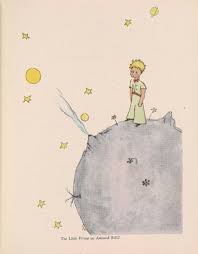
Antoine de Saint-Exupery. THE LITTLE PRINCE. Farshore, 2017.
Re-read this classic. It is somewhat dated but the main idea for me is: that the use of imagination (or hallucination) during times of crisis is a survival skill.
Side by side
On the thrift store shelf
The Prince and The Little Prince.
Bimba Landmann. IN SEARCH OF THE LITTLE PRINCE: THE STORY OF ANTOINE de SAINT-EXUPERY. Eerdmans, 2014.
An illustrated children's book about the beloved writer's life. I always think this is such an important point to make with children, to stress that books are written by real people.

Shel Silverstein. THE MISSING PIECE. Harper Collins, 1976.
Finding yourself, told in pencil and line.
I just had the feeling that we've learned things since then. Pretty basic, that no one or nothing else can make one complete.

Kurt Vonnegut. SLAUGHTERHOUSE-FIVE. 1969
I wanted to read this book because I had heard it referenced in some creative non-fiction writing as a great example of the technique of braiding stories. Billy Pilgrim, as a very young soldier, witnessed the fire-bombing of Dresden. Twenty years later, after he has trained as an optometrist, married the bosses daughter, runs his own and several other offices, attempts to research and come to terms with what he saw and learned when he was one of the child soldiers. Ironically, for me, he too references the 19th century book from which Penny got her title, The Madness of Crowds. It is a wonderful read. I especially remember the scene where Billy imagines the bombs going back up into the planes, the planes back to base, the bombs back to the factories where they were made, the metal used to make them going back into the ground.

Stevie Cameron. The PICTON FILE. Knopf, 2007. Two hundred and fifty pages about the reporter's work covering the Robert Picton case in...


